📖 Lesson content
Video
What is thinking?
Some tasks need more than a quick answer. Claude can work through a problem before responding — a feature called extended thinking. In this lesson, we'll look at what thinking is, how to turn it on, and when it actually helps.
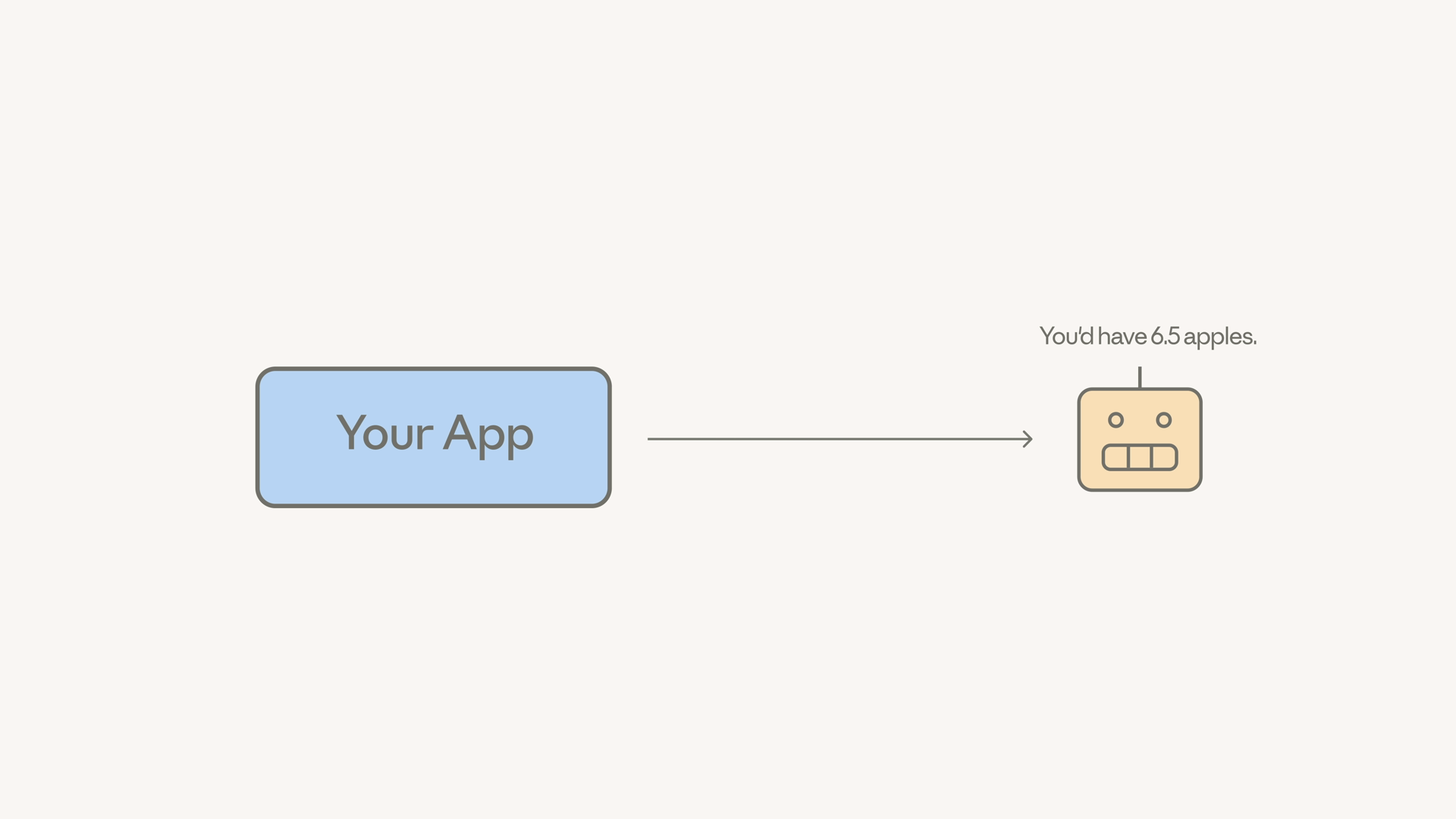
Here's the failure mode we're trying to avoid. Ask a model a multi-step question and have it answer immediately, and it can confidently get it wrong:
What is extended thinking?
Extended thinking lets Claude reason step by step before producing a final response. When it's enabled, Claude generates internal reasoning tokens — often called a chain of thought — and then delivers the answer. The reasoning isn't hidden: you can see it in the response alongside the final text.
Adaptive thinking on Opus 4.7
With Opus 4.7, thinking is adaptive. You don't pick a token budget. You just turn it on, and Claude decides dynamically when to think and how much.
To control how much Claude thinks, use the effort parameter. One gotcha: it goes inside output_config, not next to the thinking block. The levels are:
lowmediumhigh(the default)xhigh(extra high)max
When to use it (and when to skip it)
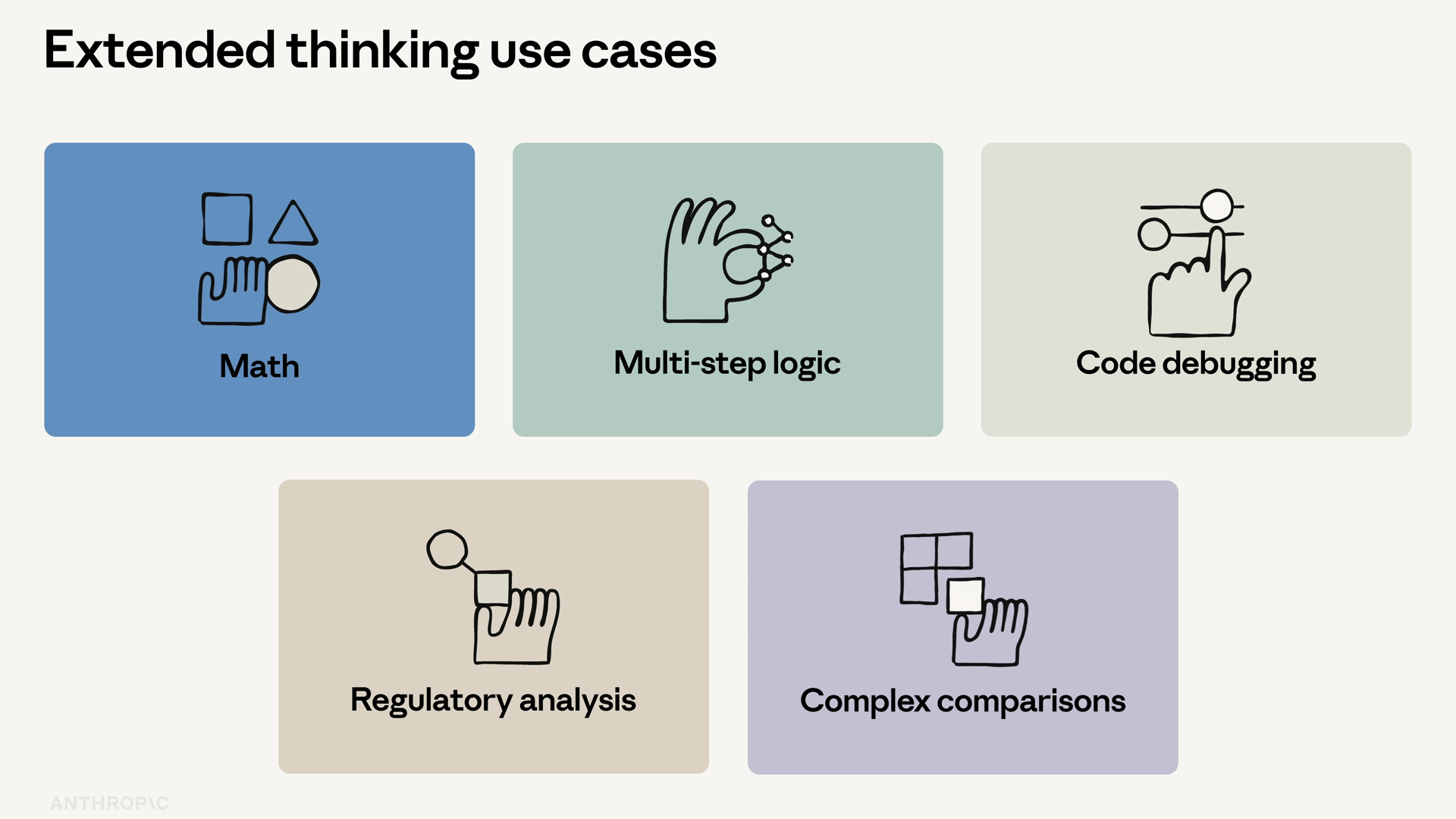
Extended thinking helps with:
- Math and multi-step logic
- Code debugging
- Regulatory analysis
- Anything that involves trade-offs or comparing options
Skip it for simple classification, extraction, or boilerplate. For those tasks it just adds latency and cost without actually improving the results.
Thinking in action
Let's see it work. Here's an agent loop with one weather tool, and we'll ask Claude to plan a road trip out of San Francisco — two stops, weighing weather and drive time. That's a real trade-off, the kind of question where thinking earns its keep.
import anthropic

client = anthropic.Anthropic()

weather_tool = {
    "name": "get_weather",
    "description": "Get the current weather for a city.",
    "input_schema": {
        "type": "object",
        "properties": {
            "city": {"type": "string", "description": "City name"}
        },
        "required": ["city"],
    },
}

response = client.messages.create(
    model="claude-opus-4-7",
    max_tokens=16000,
    thinking={"type": "adaptive"},
    output_config={"effort": "high"},  # low | medium | high | xhigh | max
    tools=[weather_tool],
    messages=[
        {
            "role": "user",
            "content": "Plan a road trip out of San Francisco with two stops, "
                       "weighing weather and drive time.",
        }
    ],
)
When you run this, the output is more interesting than usual. You'll see thinking blocks where Claude works through the trade-offs, followed by tool calls to check each city, and finally a text block with the actual recommendation.
The reasoning is visible — that's the whole point.
Why this matters in production
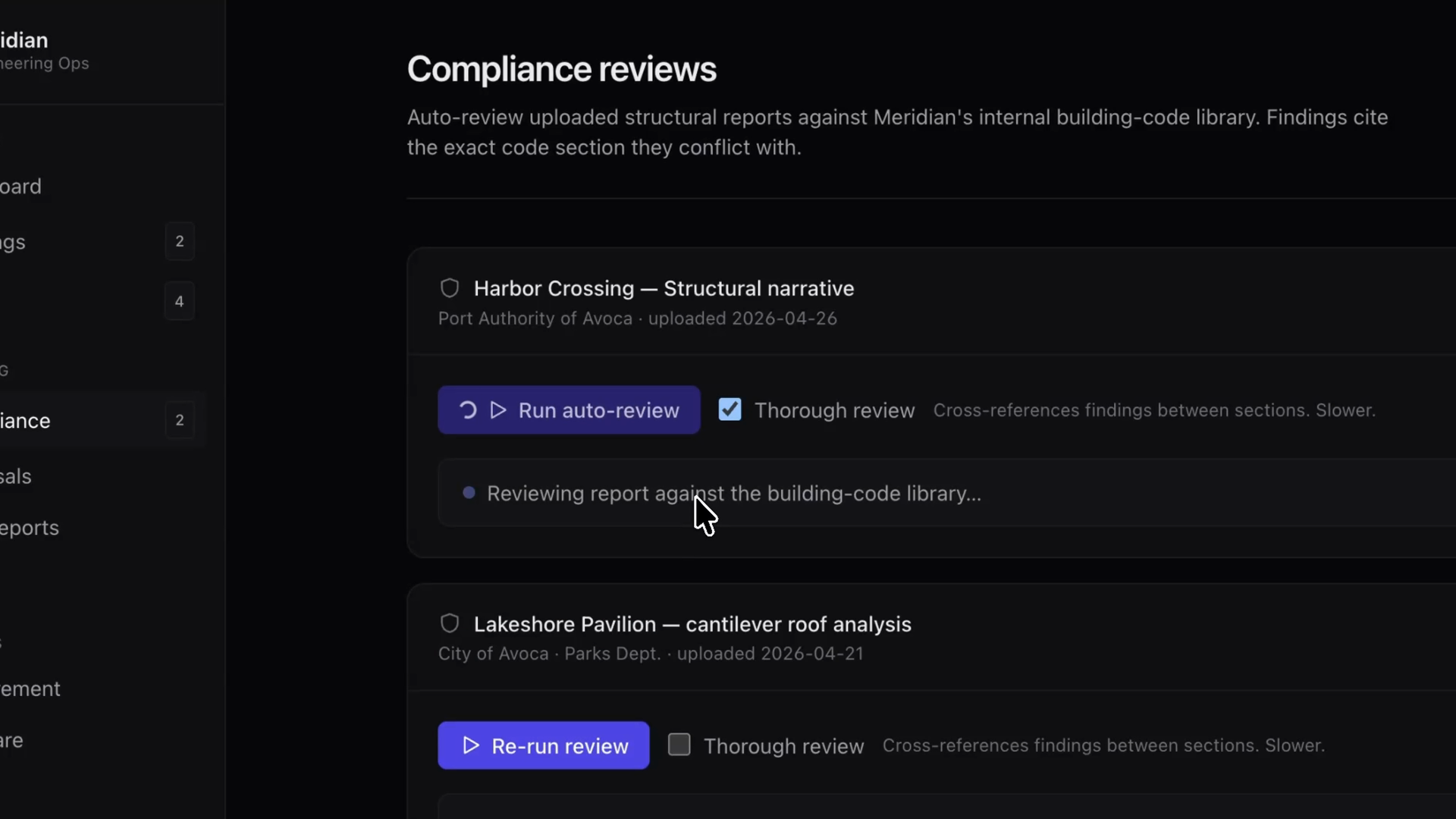
In a production app, this is the difference between an agent that finds problems one at a time and an agent that connects them. Take a compliance review app: toggling adaptive thinking on the auto-review call lets the agent reason across report sections — catching things like a wind load spec in section three that conflicts with the material spec elsewhere in the document.
Recap
- Extended thinking gives Claude room to reason before it answers, and the reasoning is visible in the response.
- With Opus 4.7, turn it on with
thinking: {"type": "adaptive"}— no token budget needed; Claude decides when and how much to think. - Dial the depth with the effort parameter inside
output_config:low,medium,high(default),xhigh, ormax. - Use it for hard, trade-off-heavy problems. Skip it for simple ones — there it just costs latency and tokens.
🎬 Video transcript
Source video:
4SunBsMGRwA
No transcript available — see lesson body for narrative content.
🔁 Related lessons
- Next: Built-in tools
- Previous: What is tool use?
- Part of paths: Path C
- Reference docs: Glossary · Skills atlas · By use-case
📚 Source & attribution
- Original Anthropic Academy lesson: https://anthropic.skilljar.com/claude-platform-101/486256
- © 2025 Anthropic. Educational fair-use only.